

B2B lead generation is the process of identifying businesses that match your ideal customer, finding the named decision makers inside them, and starting a conversation that can turn into a sale. It covers list building, cold outreach, inbound content and referrals, and it ends where lead qualification begins.
This guide is written for whoever ends up doing the work. Usually that means a founder selling in the gaps between everything else, or a two-person team with no sales development reps. Sometimes it means an agency owner filling a pipeline for clients and for the agency at the same time.
This one is a map. The terms, the channels, and where to go for depth on each one. I left the scripts and the daily routines out on purpose. Those live in the B2B lead generation strategies playbook.
Key Takeaways
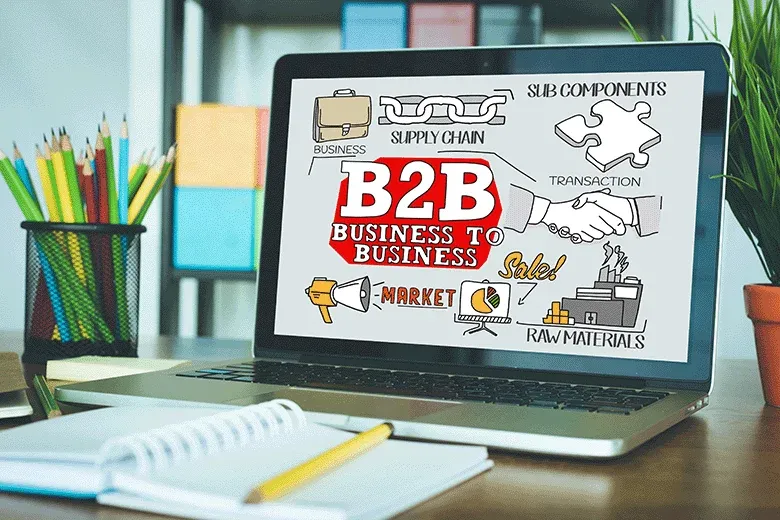
- B2B lead generation works on two layers: the company record, and the named person inside it who can actually approve a purchase.
- You are rarely selling to one person. Gartner found B2B buying groups range from five to 16 people across as many as four functions.
- Two-thirds of buyers would rather not deal with a rep at all, yet they now pull sellers in earlier. 6sense found the research-to-engagement split has shifted from 70/30 to 60/40.
- Small teams should start with outbound, because it produces conversations in week one and teaches you which message works. Inbound compounds behind it.
- There are seven core channels, and the list you build feeds nearly all of them. A bad list makes every other channel underperform.
- Email data goes stale fast. ZeroBounce puts list decay at 23% or more a year, so a file you built months ago needs re-checking before it goes out.
- The billing model decides what a tool eventually costs you. Per-record and per-seat pricing scales its cost with your ambition, while a flat annual license charges the same whether you run one search or a hundred.
What Is B2B Lead Generation?
B2B lead generation is the process of finding businesses that fit your ideal customer profile, identifying the named people inside them who influence or approve a purchase, and opening a conversation with those people. It spans sourcing data, reaching out, and handing warm interest to whoever runs the sales conversation.
You will also see the same work called business lead generation, or simply B2B prospecting. The labels differ and the job does not: find the companies, work out who inside them matters, and get a conversation started.
Your ideal customer profile is the description of the companies you sell to best: industry, size, location, and the problem that makes them buy. Everything downstream is an attempt to find more of them. Day to day that comes down to one question, asked again every Monday: where does the next conversation come from?
What counts as a B2B lead?
There is a company record: business name, address, phone number, website, category. And there is a person record: an actual human at that company, with a job title, an email address, and usually a LinkedIn profile. Most of the confusion in this subject comes from treating those two as one thing.
A list of 2,000 companies with no names attached is a targeting list. You can't email a building. Attach a named marketing director to one of those companies and you have something you can act on. Any serious effort produces both. The company record tells you whether a business is worth pursuing. Once you've decided it is, the person record is who you write to.
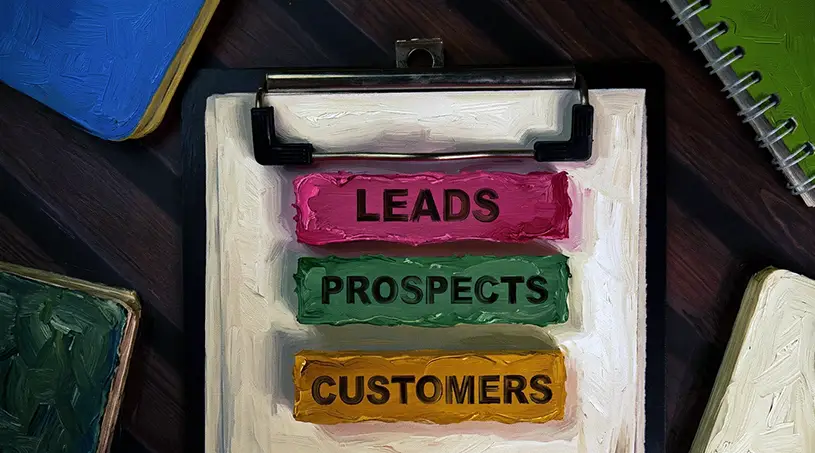
The words get used interchangeably and should not be. A lead might fit your market. Once you have made contact, that lead is a prospect. And a qualified lead is one where you have checked that the need is real, the money exists, and the person can actually spend it. Sorting them is the job of lead qualification and scoring.
What is the difference between an MQL and an SQL?
A marketing qualified lead (MQL) has shown enough interest to be worth a salesperson's time but has not asked to buy. Sales turns it into a sales qualified lead (SQL) by accepting it, having confirmed a real need, a budget and a timeline. Until that acceptance happens an MQL is only a prediction. The handoff between the two is where most pipelines quietly lose leads.
Two other labels show up often enough to be worth knowing. An information qualified lead (IQL) is someone who traded contact details for something useful and has expressed no buying intent at all. A product qualified lead (PQL) only exists if you sell something people can try before they buy, and it is the strongest signal of the four because the buyer has already used the thing.
| Stage | What it means | Typical signal | Who owns it |
|---|---|---|---|
| IQL Information qualified | Gave you contact details in exchange for information. No buying intent expressed | Downloaded a guide, subscribed to the newsletter | Marketing |
| MQL Marketing qualified | Fits the profile and has engaged enough that a salesperson should look. Still a prediction | Repeat visits, a pricing page view, a webinar attended, a score threshold crossed | Marketing |
| SQL Sales qualified | Sales has accepted it, having checked that the need, the money and the timing are all real. This is the one that belongs in the pipeline | A discovery call held, a stated problem with a date attached | Sales |
| PQL Product qualified | Has used the product and reached a point of value. Only applies if you offer a trial or a free tier | Hit an activation milestone in a trial, invited a colleague, ran a real job | Sales, on a product signal |
The distinction matters because the two labels get counted as if they were the same thing. Marketing reports MQLs, sales reports SQLs, and if nobody has written down what makes an MQL worth accepting, the two teams argue about lead quality and nobody fixes it. Agree the acceptance criteria in advance, in writing, and treat the share of MQLs that sales accepts as a number you track. A list bought or built for you arrives at the IQL stage at best, no matter what the vendor calls it.
One more thing catches people coming over from consumer marketing. In B2B you are almost never persuading one person, and the buying group is bigger than most sellers assume. Gartner's survey of 632 B2B buyers puts it plainly:
"Buying groups are more diverse than ever, ranging from five to 16 people across as many as four functions. Each member may have differing priorities and opinions."
The same survey found 74% of buyer teams show unhealthy conflict while deciding. Which puts the name you collect in perspective. It gets you into the building, and then five to sixteen other people argue the decision out in meetings you never attend.
How is B2B lead generation different from B2C?
B2C aims at one individual making a quick decision with their own money. In B2B a committee spends the company's money, several people have to agree, and any one of them can object. The long cycle, the deep research and the targeting by job title rather than demographic all follow from that.
You can't rely on a single persuasive moment, because the person you convince then has to re-convince colleagues you'll never meet, using words you didn't supply. So you target roles. Age brackets and income bands tell you nothing here. Much of what you write also has to survive being forwarded, which changes the job. And when results disappoint, the consumer instinct is to turn up the volume. In B2B that mostly buys you more of the wrong companies.
Where does lead generation sit in the sales process?
Lead generation is the front of the machine. It sources the raw interest that everything downstream depends on. After it comes qualification, then nurturing the people who are interested but not ready, then the close. Each stage is narrower than the one before it, and drawing that shape gives you the lead generation funnel.
A failure here rarely looks like one. It shows up as a closing problem, or a pricing problem, and gets diagnosed as that instead. Then somebody rewrites the pricing page, the numbers do not move, and the actual cause was the wrong companies entering the funnel months earlier.
Why does it matter for small teams and agencies?
For a small B2B company, a working lead generation process is the difference between a pipeline you control and one that depends on referrals showing up by luck. Referral-only growth feels fine right up until a major client leaves and there is nothing to replace them with. Then you find out. You cannot test a new vertical, forecast with any confidence, or choose when to grow. All of which argues for treating lead generation for small business as a system you maintain rather than something you do in the quiet weeks.
For agencies the stakes are sharper, and slightly embarrassing. An agency that sells lead generation but cannot fill its own pipeline has a credibility problem as much as a revenue one, because the same machinery has to run twice: once for clients, once for itself. Lead generation for marketing agencies is its own discipline largely because of that doubling.
What Is the Difference Between Inbound and Outbound Lead Generation?
Inbound lead generation attracts buyers who are already looking, using content, SEO and referrals. Outbound goes to buyers who are not looking yet, using cold email, LinkedIn and calls. Inbound leads turn up warm but on their own schedule, while outbound starts when you decide and leaves more of the work to you.
What is inbound lead generation?
Inbound means the buyer finds you. They search for a problem, land on something you published, and raise their hand. The leads are warmer because the intent came from them, and the asset keeps working after you stop touching it.
The cost is time. An article doesn't rank the week you publish it, so inbound pays out on a delay measured in months. Hard to live on, if you need revenue this quarter.
What is outbound lead generation?
With outbound, you go and find the buyer. You decide which companies you want, identify the right people, and contact them directly. Nothing has to compound first, which is why conversations can start in the first week.
You pay for that with a harder job. Interrupting someone who did not ask to hear from you sets a high bar for relevance, and it puts almost all the weight on your targeting list.
Which should a small team start with?
Start with outbound. It hands you control over timing and targeting, and a team with no pipeline and no time is short of exactly those two. There is a research benefit as well. Fifty cold emails teach you more about which message works than three months of guessing at content topics.
Then build inbound behind it. The objections you hear three times on calls are your article topics, and you only collect them by talking to people first. Teams that start with inbound alone often spend six months producing content for a positioning they never tested.
There is a timing argument for outbound too, and it is stronger than it used to be. 6sense found that 94% of buying groups had already ranked their preferred vendors before they made first contact with anyone, and they went on to buy from that early favourite 77% of the time. Waiting to be found means waiting for a race that is largely decided. Outbound is how you get into consideration before the ranking hardens. Inbound still keeps paying long after you stop working on it. So it belongs in the plan, just second rather than first.
Two things would change my answer. An audience that already trusts you, or a product people search for by name. With either of those, inbound beats outbound from a standing start and I'd tell you to begin there. I am assuming you have neither yet, which is true of most of the small teams I write for.
| Dimension | Inbound | Outbound |
|---|---|---|
| Who initiates | The buyer finds you | You find the buyer |
| Time to first lead | Months, as content gains traction | Days, as soon as you send |
| Control over targeting | Low. You get who you get | High. You pick the exact companies |
| Cost profile | Front-loaded time, low marginal cost later | Steady cost per campaign, scales with volume |
| Skill required | Writing, SEO, positioning | Research, list building, concise copy |
| How it scales | Compounds without more effort | Scales linearly with effort and data |
| Best for | Teams with runway and a proven message | Teams that need conversations now |
What Are the 7 Core B2B Lead Generation Channels?
The seven core B2B lead generation channels are cold email, LinkedIn and social selling, phone and multi-touch outbound, data sourcing, content marketing and SEO, referrals and partnerships, and paid advertising. A small team should pick two or three and run them properly instead of covering all seven thinly.
1. Cold email
Cold email means contacting a named person at a company that has not heard from you, with a short message about a problem you think they have. For small B2B teams it is still the best channel going. It costs almost nothing to run and reaches decision makers without going through anybody first. Anyone selling against a clear, describable pain can use it, and it works especially well on small and mid-sized businesses, where the person who reads the email is often the person who can buy.
Most of the effort goes into the copy, which is not where the outcome gets decided. It comes down to whether the company you picked has the problem you're describing, and whether the person you picked would be the one to fix it. Get those right and a plain email works. Get them wrong and you can rewrite the thing forever without rescuing it.
The constraint is deliverability, and those rules have hardened from good practice into technical requirements. It is regulated too: the FTC states that CAN-SPAM "makes no exception for business-to-business email", and in the EU the GDPR requires a lawful basis. Cold email lead generation works through both, because getting them right is most of the job.
Budget for that setup before you write a word of the first sequence. Buying a sending domain, adding the authentication records and warming the mailbox up is a week or two of waiting that you can't compress by working harder.
2. LinkedIn and social selling
On LinkedIn you can approach prospects directly, post often enough that they recognise your name, or pay for Sales Navigator and filter down to specific roles at specific companies. Most people who do well there are doing some of each, and LinkedIn lead generation works through that mix. None of it applies unless the titles you sell to are actually on the platform, which covers marketing, sales, technology and the executive layer well, and leaves trades and field operations thin.
The channel refuses to scale cleanly. Connection requests and messages are capped, and the parts that work best, commenting like a human and posting week after week, are manual by nature. You can't buy your way past that with tooling, so LinkedIn rewards patience more than it rewards budget.
3. Phone and multi-touch outbound
Calling on its own has largely stopped working. Where it still earns its place is as one touch inside a sequence that also runs email and LinkedIn, so each touch makes the next one less cold. Higher-value deals justify the time, since one closed contract pays for a lot of dialling, and some markets are simply easier to reach by phone than by inbox.
Thin research produces exactly the call everyone hates receiving, so the work that decides how it goes happens before you dial. Outbound sales prospecting for small teams covers the targeting side, and the list you built for email is the same list you should be calling from.
4. Data sourcing: how to find B2B leads
Data sourcing means assembling the companies you want to reach and the named people inside them, whether you extract them from multiple B2B directories, pull public business data, or build the list by hand. If you have ever wondered how to find B2B leads, this is the unglamorous answer: you go and get them.
Everyone needs this one. Cold email, LinkedIn and phone all consume a list, and if the list is wrong all three underperform no matter how good the message is.
List quality varies enormously, and a cheap list is cheap for a reason. Start with how to build a B2B prospect list, understand the mechanics in web scraping for lead generation, and if you sell to local businesses, local lead generation covers that variation.
5. Content marketing and SEO
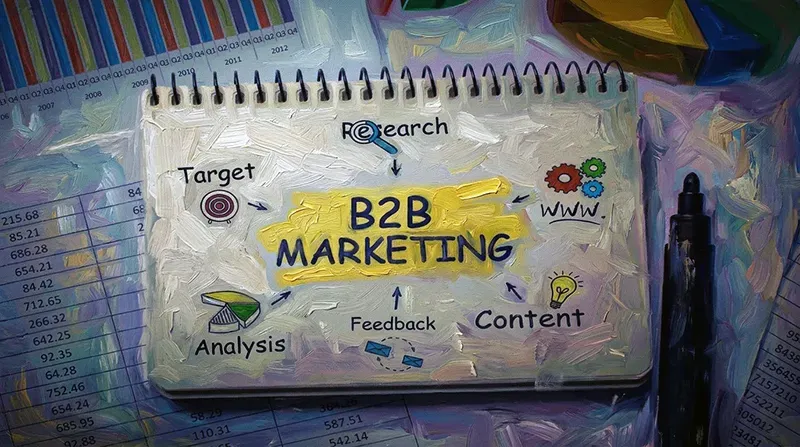
This channel asks for runway before it asks for anything else. Content marketing means publishing the answers to questions your buyers are already searching for, so they arrive with their intent already formed, and none of that pays out in the quarter you start. Genuine expertise is the whole input: if you know something the market does not, this is where that knowledge turns into pipeline instead of sitting in your head.
It also demands that you own one topic completely, which is harder than it sounds. Ten topics covered thinly in a crowded market earn you nothing. Execution is in the B2B lead generation strategies playbook, but if you are weighing this against outbound and you have one quarter to prove something works, take outbound.
6. Referrals and partnerships
You can't decide to receive more referrals this month. That is the awkward thing about the channel with the best conversion rate on this list: it runs on somebody else's trust, extended to somebody else's contact, on their schedule.
So ask deliberately, and time the ask to the week you have just delivered something measurable. Partnerships are the systematic version of the same idea, a standing arrangement with a business that serves the same customers without competing for them. Any company with happy customers can run this, and most never ask. Lead generation for marketing agencies goes further into partnership structures.
7. Paid advertising
Paid means buying attention on search or LinkedIn, and it is the fastest way to find out whether a message lands without waiting on SEO. Run it only if you know what a customer is worth to you over their lifetime.
It is also the easiest channel to lose money on. B2B clicks are expensive because the audience is small and each customer is worth a great deal, so competitors bid hard. For most small teams this is the one to postpone. If budget is your binding constraint, lead generation for small business makes the case for where to spend.
Plenty of B2B companies do run paid profitably from a standing start, so read the paragraph above as a default you are allowed to override. If you already have a message you know converts, the case for waiting gets much weaker. The version I have never seen work is buying clicks to find out whether the message converts at all.
Building that list is the step most teams underestimate, and it is the step Lead Scrape exists to remove.
Which Lead Generation Method Fits Your Size and Budget?
Your tightest constraint chooses for you. Short of money, run the outbound you can execute yourself. If time is what you lack, buy tooling that removes the manual list building. And when the missing ingredient is credibility, content and referrals have to come before you scale any outreach.
Most channel advice assumes you get to pick, and in practice you rarely do. One resource is always scarcer than the others, and it should settle the argument.
If you are a solo founder or a two-person team
Time is what you are short of, and severely. Every hour on lead generation is an hour you didn't spend delivering the work that pays this month, so one-person businesses tend to oscillate between "too busy to prospect" and "no pipeline". Pick one channel and run it well.
Cold email is usually the answer, because it is the only channel where a single person can start conversations at volume without a budget, an audience, or a reputation.
A made-up example, because the shape is easier to see than to describe. A consultant selling operations work to manufacturing firms needs 200 well-chosen manufacturers within a two-hour drive, the name of the operations lead at each, and a message naming a problem she has fixed before. She can skip the content strategy, the podcast and the LinkedIn following entirely. That is a week of setup and an hour a day afterwards. The reputation gets built later, funded by the work the emails bring in.
If you run a marketing agency
Here the work has to happen twice, for clients and for yourself, and your own pipeline is what gets dropped the moment a client escalates. Trying harder does not fix that. The fix is a sourcing process repeatable enough that running it for yourself costs almost nothing.
Say an agency lands one dental client, and then realises it can produce a clean list of every dental practice in three neighbouring cities. It has just found its next five prospects, and it can walk into those conversations already knowing the market. The pitch stops being "we do marketing" and becomes "we have worked with practices like yours, and here is what we found." Add a second vertical and the same process runs again for the cost of an afternoon.
That is the sourcing side, run for your own benefit. Packaging the same process and selling it to clients as a recurring service line is a separate commercial decision with its own pricing models and margins, and our guide to selling lead generation as a service covers that side of it.
If you are a small SaaS or B2B sales team
Focus is what runs short here. You have a product, some customers, and too many opinions about which segment to chase next. The temptation is to settle the argument in a meeting, which settles nothing, because everyone in the room is reasoning from the same handful of anecdotes.
Use outbound as an instrument instead. Pick three segments, build a list for each, send the same offer to all three, and let the replies decide where you concentrate. Treat it as an experiment that happens to produce pipeline as a byproduct.
See lead generation for SaaS companies for the product-led variations, where self-serve signups complicate the picture.
| Your situation | Tightest constraint | Start here | Skip for now |
|---|---|---|---|
| Solo founder or two-person team | Time | Cold email on a tightly targeted list | Paid ads, content, events |
| Small B2B sales team (3 to 10) | Focus | Outbound across a few test segments | Broad brand content |
| Marketing agency | Doing it twice | One reusable sourcing process | Bespoke work per client |
| Small SaaS with product-led motion | Segment clarity | Outbound to validate segments | Enterprise-style account-based marketing (ABM) |
How Much Does B2B Lead Generation Cost?
Budget roughly $50 to $150 a month for the whole software stack if you are a small team, and expect your own hours to dwarf that. Three things take the money: the data you source, the tools you send with, and the time you spend. Watch the pricing model rather than the sticker price. Per-record and per-seat tools charge you more precisely when the channel starts working.
Ask what lead generation costs and you get an average cost per lead, usually quoted somewhere between a few dollars and a few hundred. That number is close to useless, because it averages a self-serve tool sold to small businesses with an enterprise deal that took nine months and four people. Cost per lead only reports what already happened. What you control is the four layers below, and the terms on which each one bills you.
| Layer | What you are paying for | How it usually bills | What makes the bill grow |
|---|---|---|---|
| Data | Companies and named contacts | Per record or credit, or a flat license | Every extra lead you pull, unless the license is flat |
| Verification | Confirming addresses are live before you send | Per address checked, or bundled into the data tool | List size, and re-checking the same list repeatedly |
| Outreach | Sending and tracking sequences | Per month, often per sending seat or mailbox | More mailboxes, more sending volume, more users |
| CRM | Remembering what happened | Per user per month, with a free tier at the bottom | Headcount, and contact-count tiers as the database fills |
In practice the outreach layer is the reliable monthly expense, commonly starting around $30 to $50 a month for a small sender: Instantly's entry Growth plan is $47 a month, or $37.60 billed annually. The CRM can be free until you outgrow it. The layer that decides your economics is data, because it is the only one priced against the thing you want more of. On per-record pricing, a campaign that starts producing raises your data bill in the same month it starts working.
Lead Scrape Business is $247 a year, which is about $21 a month, and it includes unlimited searches. A single Business-edition search for one industry in one large US city returns roughly 4,000 merged, de-duplicated business records with contacts attached. Run that one search and nothing else all year and the data has cost you about six cents per company. Twelve searches take it to half a cent.
Those numbers are rounded and illustrative. Result counts swing a lot by industry and by city, so I wouldn't plan a quarter around them. What holds is the shape: on a flat license the cost per lead falls every time you use the tool, while per-record pricing leaves it exactly where it started. The Standard edition is $97 a year and draws on fewer sources.
Almost nobody prices the hours, and they are the largest line item by a distance. An afternoon spent copying business names off directories costs more than the software that would have done it in ten minutes, and it's an afternoon you didn't spend talking to anyone. So when you compare tools, start with how much of your week each one hands back, and look at the price second.
What a $103.54 cost per conversion actually measures
In CMI and MarketingProfs' survey of 980 B2B respondents, fielded from June 25 to August 16, 2024, 74% said content marketing helped generate demand or leads in the previous 12 months, 62% said it helped nurture subscribers, audiences or leads, and 49% said it helped generate sales or revenue. These are self-reported content-marketing outcomes from a global respondent group that was mostly based in North America, not measured conversion or attribution rates.
The same research found that surveyed B2B content marketers distributed content through organic social media (89%), blogs on corporate websites (84%), email newsletters (71%), other email (63%), in-person events (55%), and webinars (55%). Those percentages measure channel use, not effectiveness or lead quality.
The stages that one "cost per lead" number can hide
conversion
lead
lead
Use your own cohort: media-only cost per customer = media spend ÷ customers attributed to that media cohort
WordStream/LocaliQ's $103.54 figure came from its cohort of 16,446 US search-ad campaigns running from April 2024 through March 2025 across Google Ads and Microsoft Ads. What counted as a conversion depended on each advertiser's tracking setup. Use it as paid-search context, not as a qualified-lead price or a customer acquisition cost, and use your own funnel data to connect the stages.
Sources: CMI/MarketingProfs, 2025 B2B content research; WordStream/LocaliQ, 2025 US search-ad benchmarks. Both sources are described according to their disclosed populations. Figures from incompatible datasets have not been combined.
What Tools and Software Do You Need?
A working B2B lead generation stack has four layers: a data source that produces companies and named contacts, a verification step that keeps the list clean, an outreach tool that sends and tracks sequences, and a CRM that records what happened. Small teams can cover all four affordably.
The four layers of a lead generation stack
The data layer produces the companies and the people. Lead Scrape belongs here, alongside contact databases and the email finder tools covered elsewhere.
Next comes the verification layer, which confirms the addresses are real and active before you send. Skip it and the bounces land on the domain you'll still be sending from next year.
Sequences go out from the outreach layer, which also tracks the replies. Instantly, Smartlead and Lemlist live here.
Then the CRM layer, which remembers what happened so a conversation from four months ago is not lost. HubSpot and Pipedrive are the usual choices for small teams.
You don't need the most expensive option in any layer, but you do need all four. Skip verification and your outreach tool sends to dead addresses. Leave out the CRM and your data tool keeps handing you leads you already contacted. The layers fail into each other, so a team concludes a channel "does not work" when what broke was the layer upstream of it. For the options in each layer, see lead generation tools compared and B2B lead generation software.
Where Lead Scrape fits
A disclosure before this section, since you should weigh it accordingly: I write for Lead Scrape, so what follows is the interested party describing its own tool. I've tried to keep it to what the software does and where it stops.
Lead Scrape is a desktop application for Windows and macOS, and it sits in the data layer. You pick an industry and a location, and it extracts business records from multiple B2B directories, merges them and removes the duplicates. Both layers described earlier come back: the company record, and a Contacts tab with the named people at those companies, including job title, email address and LinkedIn URL.
The scrape option that matters most for outbound is email verification, because it runs during the scrape itself, so the list you export is already the list you can send to. Standard draws on three sources. Seven feed the Business edition, which also adds bulk searches across an entire state or region. Results export to CSV, Excel and JSON, or push directly into HubSpot, Pipedrive and Instantly.
The arithmetic explains why that ordering matters. Take the emails attached to that same 4,000-record search and apply ZeroBounce's finding that at least 23% of an email list degrades in a year. Sit on the file for twelve months and roughly a quarter of those addresses are dead when you finally send, and each one is a bounce charged against your sending domain.
That 23% is an industry-wide figure and it won't describe your own list precisely. Order of magnitude is all I use it for. It is enough to explain why verification belongs inside the scrape rather than in a cleanup pass afterwards, which nobody gets round to.
The commercial difference worth understanding is the pricing model. Lead Scrape is a flat annual license with unlimited searches and no per-lead charges, so your ten thousandth lead costs what your first did. Tools priced per record or per seat scale their cost with your ambition. See Lead Scrape features, or extract verified emails for a narrower walkthrough, and lead extractor software for how the category works.

How Do You Measure Lead Generation Success?
Count the qualified leads entering your pipeline each month, then follow the three conversions behind that number: outreach into replies, replies into meetings, meetings into revenue. Track activity weekly and outcomes monthly, or you'll optimise the wrong end of the funnel.
Leading and lagging indicators, and how often to review them
Leading indicators are the inputs you control: lists built, emails sent, connections accepted. Meetings, closed revenue and cost per lead are the lagging ones, the outputs you actually want and the ones you cannot touch directly. Only the first set is available to a weekly review.
Review only the lagging numbers and what you get is a monthly look at revenue, disappointment, and no way to tell which input caused it. By the time a lagging indicator moves, the decision that moved it is weeks old and the details are gone. Review activity weekly, outcomes monthly, channel mix quarterly. Leads that are interested but not yet ready belong in lead nurturing strategies, and the pipeline they feed is the subject of how to build a sales pipeline.
| Metric | What it tells you | How to calculate it | Review |
|---|---|---|---|
| Qualified leads per month | Whether the top of the funnel is filling at all | Count of leads that meet your qualification criteria | Monthly |
| Reply rate | Whether your targeting and message land | Replies divided by messages delivered | Weekly |
| Meeting booked rate | Whether replies convert into real conversations | Meetings booked divided by replies received | Weekly |
| Lead-to-customer rate | Whether the leads were ever the right ones | Customers divided by qualified leads | Monthly |
| Cost per lead | Whether the channel is economically viable | Total channel spend divided by leads generated | Monthly |
| Pipeline coverage | Whether you have enough pipeline to hit target | Open pipeline value divided by revenue target | Quarterly |
Read them against each other rather than one at a time. Each metric is a link, and the break shows up in the gap between two of them. A healthy reply rate with almost no meetings booked points at what you say once someone answers, so the lead generation is working and the sales conversation is what needs attention. A poor reply rate alongside a good meeting rate says the opposite: the message works on the few people who see it, and the list is what is letting you down.
Twenty emails that produce nothing tell you almost nothing. Small teams generate small samples, and a small sample will happily point you at the wrong conclusion. Give a channel enough volume to say something before you judge it. And resist changing the message, the list and the sending tool in the same week, or you'll never know which one mattered.
What Are the Most Common B2B Lead Generation Mistakes?
The most common B2B lead generation mistakes happen upstream of outreach: targeting everyone, sending to an unverified list, buying data instead of building it, relying on one channel, never following up, recording nothing, and measuring only closed deals.
No defined target segment. "Any business that needs marketing" is not a segment. It produces messages so generic that nobody recognises themselves in them, and it makes every downstream decision harder, because you can't write a sharp email to an audience you haven't defined. Narrow until you can name the job title at the type of company. It feels like writing off most of your market, which it is, and the remainder is still everyone you had a real chance with.
Sending to an unverified list. This is the expensive one. Hammering dead addresses damages the sending reputation you need for every future campaign, and mailbox providers now enforce that with hard thresholds, as the deliverability rules below set out. Run email verification for lead generation immediately before the send.
Buying a generic list instead of building a targeted one. Bought lists are sold to many buyers, rarely match your market precisely, and have been decaying since the day they were compiled, at the yearly rate described earlier.
Depending on a single channel. Platforms change rules and deliverability shifts, so a channel that worked all year can halve without warning, and one channel means you have no answer when it does. The fix is a second channel you have already tested, not seven channels you run badly. Know which one you would turn to, and try it before you need it.
No follow-up. One send, no reply, and the channel gets written off. An unanswered first email usually means the person was busy, not uninterested.
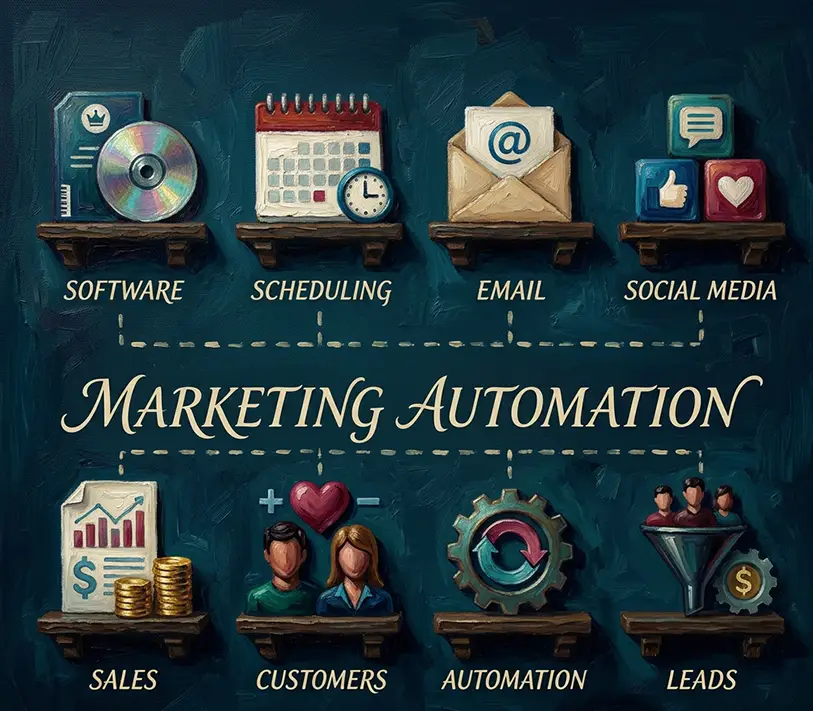
No CRM, so nothing is remembered. Without a record, a "not right now" from March is invisible in September, the month it might finally have been ready. Spreadsheets survive about a hundred leads. Consider automated lead generation workflows to move records without manual copying.
Measuring only closed deals. Revenue is a lagging indicator on a long delay. If it's the only number you watch, you find out a campaign failed a quarter after you could have fixed it. Score and track leads as they move, which is the argument for lead qualification and scoring, and compare channels honestly with lead generation tools compared.
Nobody on that list sent a badly worded email. They targeted the wrong people, sent to dead addresses, or forgot what happened last time, and all of that happens before anyone writes a word of outreach. It looks like admin, so it goes to the bottom of the list, and then the campaign gets blamed for it.
What Has Changed in B2B Lead Generation Recently?
Three things have shifted: buyers do more of the journey alone, AI has entered the buying process itself, and mailbox providers have turned deliverability into a technical requirement with thresholds attached.
Buyers say they would rather not deal with a salesperson. Gartner found that 67% of B2B buyers prefer a rep-free experience. What they do is more interesting. 6sense reports that the balance between independent research and seller engagement has shifted from a 70/30 split to 60/40, so buyers are now bringing sellers in earlier than before, not later. The window is narrower, and by the time they make contact a shortlist is already forming.
How is AI changing B2B lead generation?
AI is changing the buying side faster than the selling side. Gartner's 2026 survey of 646 B2B buyers, fielded between August and September 2025, found 45% used AI during a recent purchase, which means an assistant may be summarising you against two competitors before you ever speak.
The AI shift is the one most likely to be underestimated, because it is happening inside the buyer's process rather than yours. In the same Gartner release, Alyssa Cruz, a Senior Principal Analyst in its Sales Practice, frames the consequence for sellers:
"B2B buyers are progressing through critical buying tasks in more autonomous ways, and sellers can't rely on static collateral to carry influence in those moments."
None of that kills outreach. It does raise the floor under it, because a thin, generic email now lands in front of someone who has already read three comparison pages about you and had an assistant summarise them.
What changed in email deliverability?
Deliverability tightened in the same period. Since February 2024 Gmail and Yahoo have required bulk senders to authenticate with SPF, DKIM and DMARC, the three DNS records that let a mailbox provider confirm your mail really came from your domain. Google also tells senders to keep spam rates below 0.10% in Postmaster Tools and never to reach 0.30%, thresholds that used to be advice and are now enforced.
That changes what a stale list costs you. The damage lands on the reputation of the domain you'll still be sending from next year, and it doesn't reset. Keep sending, but run the list past a verifier the week you send it, not the month you built it.
Where Should You Start This Week?
Define one segment precisely enough to name the job title you want, then build a list of the companies in it with named contacts and verified emails. Send a single sequence to that list and treat whatever comes back as data.
That loop is small enough to run before Friday, and it will tell you more than another week of planning. Very few teams get stuck for want of a strategy. They stall on the first concrete step, because building a list of real companies with real people at them is tedious, and it never feels like the urgent thing on a Tuesday.
Expect the first sequence to underperform. Treat it as the first reading on the instrument: it tells you whether the segment, the message or the data was wrong, and you can only find that out by sending.
Lead Scrape handles the middle step, where most people stall: it produces the companies and the named people inside them, verified, from multiple B2B directories, on a flat annual license with no per-lead charges. You can download the free trial and build a list today, or review Lead Scrape pricing if you already know what you need.